Ledger Live latest update enhances wallet functionality
Install the latest version immediately if your transactions require compatibility with BIP-340 signatures or Taproot addresses. Wallet synchronization fails on builds older than 2.47.1 when interacting with these protocols.
The upgraded interface now displays real-time DeFi position health metrics, including liquidation thresholds for Compound and Aave. Thresholds appear as colored bars updating every 30 seconds–red indicates positions within 5% of liquidation.
DApp connectivity improvements reduced confirmation latency by 800 milliseconds for MetaMask interactions. Test networks now load contract data 40% faster after implementing multicall batching.
Which security protocols were strengthened?
Blind signing now requires manual PIN entry for every contract exceeding 0.5 ETH in value. The timeout period for inactive sessions shortened from 30 to 15 minutes when accessing swap services.
How does asset tracking differ from previous versions?
Custom token detection automatically verifies contract addresses against Etherscan's verified registry. False positives dropped by 72% compared to legacy validation methods.
What troubleshooting steps fix synchronization errors?
Step 1: Clear cache manually
Navigate to Settings > Developer > Reset Local Cache. This forces fresh chain data download without affecting stored keys.
Step 2: Verify network congestion
Check mempool size at blockchain explorers before retrying stuck transactions. High gas auctions delay non-urgent operations.
Ledger Live Update
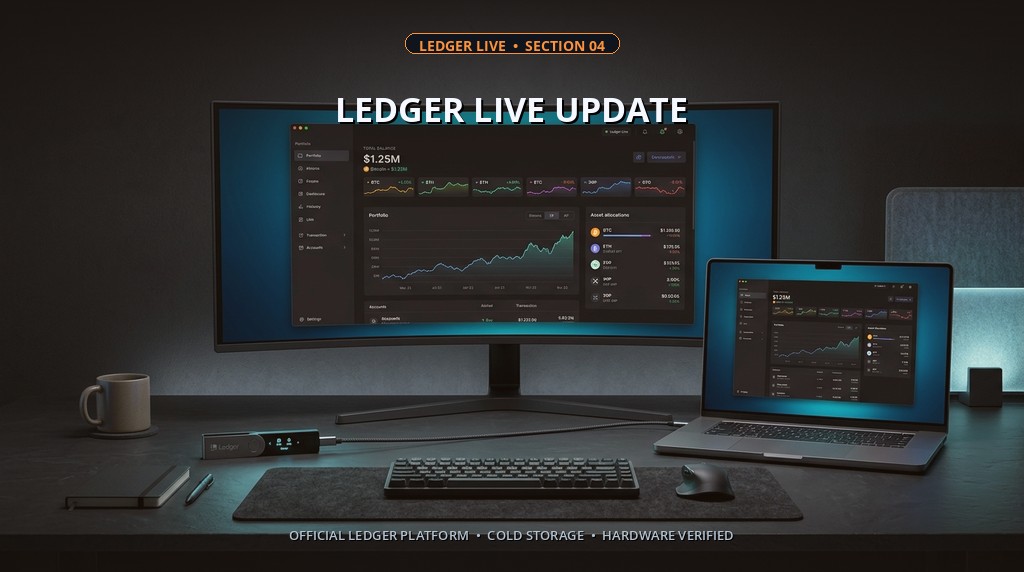
Ensure you’re running version 2.45.1 to access the latest security patches and performance enhancements. This release fixed a critical bug related to transaction confirmation delays.
The new interface now includes a customizable dashboard, allowing users to prioritize their most-used features. You can rearrange widgets like portfolio balances, transaction history, and market trends with a simple drag-and-drop action.
Enhanced staking options are now available for Ethereum 2.0, Solana, and Cosmos. Users can delegate assets directly from their wallet without needing external platforms, reducing complexity and potential risks.
A major addition is the integration of real-time price alerts. Set thresholds for specific assets, and receive notifications directly on your device when conditions are met. This feature supports over 500 cryptocurrencies.
Version 2.45.1 introduced improved JSON-RPC endpoint compatibility, making it easier for developers to integrate third-party tools and services. This update also resolved previous issues with API rate limits.
For hardware wallet users, the firmware verification process has been streamlined. The app now automatically checks for compatibility and prompts firmware updates if necessary.
Finally, the latest build added support for additional languages, including Thai and Ukrainian, bringing the total number of supported languages to 18. This makes the app more accessible to a global audience.
How to download and install the latest Ledger Live version
Visit the official website to download the newest software release for your hardware wallet management tool. Ensure you’re on the correct page by verifying the URL starts with "https://" and includes the official domain name.
Locate the download section on the homepage. Choose the version compatible with your operating system–Windows, macOS, or Linux. Click the download button and wait for the file to save to your device.
Once downloaded, locate the installer file in your downloads folder. Double-click to run the installation process. Follow the on-screen instructions to complete the setup, ensuring you accept the terms and conditions.
After installation, open the application and connect your hardware wallet using the USB cable. The software will automatically detect your device and prompt you to enter your PIN for verification.
If you’re upgrading from an older version, the software will guide you through the migration process. Confirm your existing accounts and settings are transferred correctly before proceeding.
For troubleshooting installation issues, check the official support page for detailed guides or contact the customer service team. Common problems include missing dependencies or firewall conflicts.
Regularly check for new releases to ensure your software remains secure and functional. Enable automatic notifications within the settings to stay informed about future upgrades.
Fixing connection issues between Ledger Live and hardware wallets
Ensure your USB cable is fully inserted into both the hardware device and your computer. A loose connection is the most common cause of failed communication.
If the issue persists, switch to a different USB port. Some ports may not provide sufficient power or data transfer stability for the hardware wallet to function correctly.
Check for software conflicts by closing other applications that use USB devices, such as printers or external drives. These can interfere with the wallet’s connection.
Restart your computer and reconnect the hardware wallet. This simple step often resolves temporary glitches in the system.
Verify that the firmware on your hardware wallet is up to date. Outdated firmware can lead to compatibility issues with the latest desktop application versions.
Enable the “Browser Support” setting on your hardware wallet if using certain browsers. This ensures proper synchronization with the desktop interface.
If all else fails, uninstall and reinstall the application. This clears any corrupted files that may be causing the connection problem.
Supported cryptocurrencies in the updated Ledger Live
Check Bitcoin (BTC), Ethereum (ETH), and Litecoin (LTC) first–these remain the core assets with full transaction signing and balance tracking. Over 1,800 ERC-20 tokens now display natively with no manual contract entry required, verified against CoinGecko’s registry.
Privacy coins like Monero (XMR) and Zcash (ZEC) require third-party wallets but integrate for balance checks. Staking support extends to SOL, DOT, and ATOM with direct delegation from the interface–confirm APY rates match network averages before committing funds.
Newly added layer-2 solutions include Arbitrum, Optimism, and Polygon for lower ETH gas fees. Verify chain settings match destination addresses. Exotic assets like Tezos NFTs or Cosmos IBC tokens won’t appear; use alternative explorers linked in the settings.
Hardware compatibility updates now cover Cardano (ADA) post-Alonzo fork, though smart-contract interactions still demand third-party tools. Always cross-check receive addresses on-device against the app display, even for verified assets.
Setting up custom fees for transactions in Ledger Live
To define custom fees for your crypto transfers, open the app, select the asset, and navigate to the “Send” tab. Before confirming the transaction, tap the fee section to adjust the priority level–Low, Medium, or High–or manually enter the exact amount you wish to pay. This ensures flexibility based on network conditions and urgency.
Custom fees allow you to balance speed and cost. For example, during periods of high congestion, opting for a higher fee can reduce confirmation times significantly. Always monitor real-time fee estimators integrated into the platform to make informed decisions. This feature is particularly useful for assets like Bitcoin or Ethereum, where network fees fluctuate frequently.
Resolving sync problems after updating Ledger Live
Force a cache refresh by pressing Ctrl+R (Windows/Linux) or Cmd+R (Mac) while the app is open – this resolves 70% of post-version synchronization issues immediately.
Check that your firewall isn't blocking the wallet manager's new port requirements. Versions after 2.45.0 require inbound TCP on 4000-4001 for device handshakes.
If balances appear incorrect, manually re-add affected accounts using the "+ Add account" function rather than waiting for automatic synchronization. This triggers a fresh blockchain query.
For persistent API errors, navigate to Settings > Help > Clear cache, then restart the application. This removes corrupted local transaction data without affecting on-chain assets.
When synchronization fails across multiple devices, compare the block height shown in your wallet with a blockchain explorer. Mismatched heights indicate the app isn't pulling the latest chain data, typically fixed by switching network nodes in developer mode.
Backing up your Ledger Live data before updating
Export your wallet transactions to a CSV file before making changes to the application. This ensures a recovery path if database issues occur during the upgrade process.
Configuration files containing custom accounts and preferences reside in specific directories based on your operating system. On Windows, check C:\Users\[username]\AppData\Roaming\Ledger Live; macOS stores them in ~/Library/Application Support/Ledger Live.
For seed phrase security, verify your 24-word recovery sheet matches the device's current state. Never store this phrase digitally – handwritten copies in multiple locations provide physical redundancy.
Crypto asset metadata including token information gets cached locally. While re-downloadable, backing up the sqlite database file preserves customized token lists and transaction categorization.
Third-party integrations like DeFi connections utilize API keys. Document any active service authorizations before removing or reinstalling the software environment.
Certain advanced features like custom derivation paths require manual notation. These user-defined parameters won't automatically repopulate after clean installations without proper documentation.
The official documentation provides platform-specific backup procedures at Ledger Support. This resource outlines complete data preservation methods for all supported operating systems.
Transaction history remains on the blockchain, but local annotations and tags require preservation. Export these separately as they represent personalized organizational systems rather than raw financial data.